
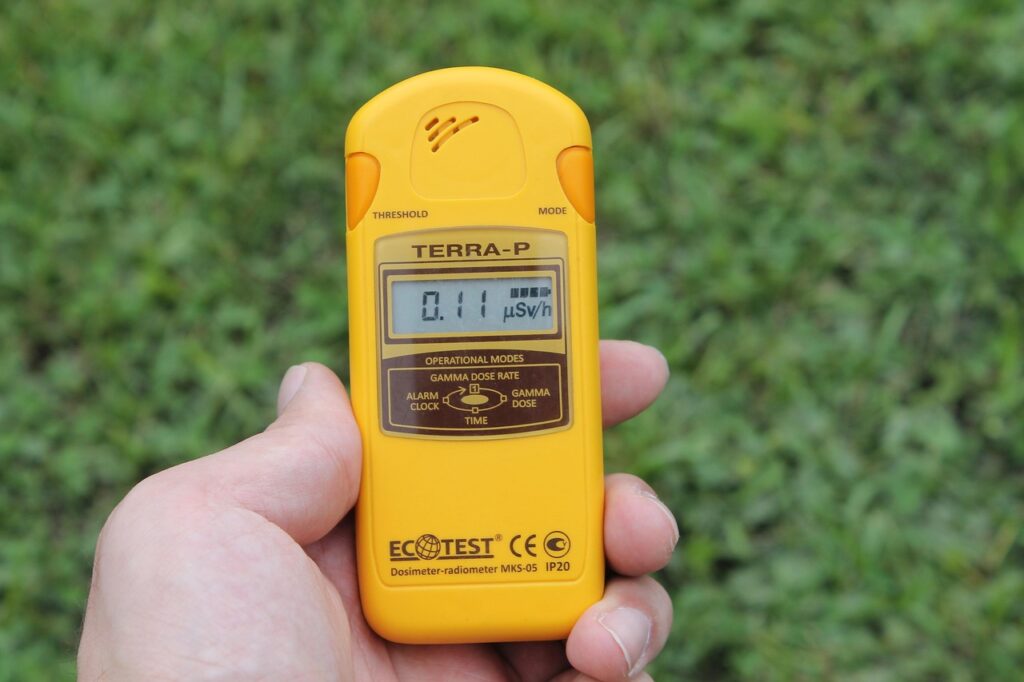
Electromagnetic radiation is energy in the form of waves that combines two sources: a voltage source (electric field) and a current source (magnetic field). The combination of these two sources creates an electromagnetic field. The intensity of the electromagnetic field depends on the voltage and current levels, the distance from the installation, the structure of the installation, and similar factors. Sources of electromagnetic radiation are diverse, ranging from power lines and various electrical facilities used for electricity transmission and distribution to a wide variety of household electrical appliances.
Electromagnetic radiation is also referred to as non-ionizing radiation because it does not ionize the atoms that absorb it, meaning it does not alter the atomic structure. This is in contrast to radiation from radioactive materials, X-ray machines, and similar sources, known as ionizing radiation, which is more dangerous to public health. In recent years, public concern has increased regarding the potential damage caused by electromagnetic radiation.
The maximum exposure threshold at which humans may be exposed to radiation in general, and specifically in the field of cellular radiation, according to the recommendation of the World Health Organization adopted by most countries worldwide, is 400 microwatts per square centimeter. In Israel, stricter limits than those recommended and commonly practiced worldwide have been adopted. As a result, the Ministry of Environmental Protection has defined three exposure levels as follows:
-
In permanently populated areas, the limit is ten times stricter, namely 40 microwatts per square centimeter.
-
In areas not permanently populated, such as streets, 100 microwatts per square centimeter.
-
In unpopulated areas, no additional restriction applies, namely 400 microwatts per square centimeter.
As of the latest review, the State of Israel still has no formal standard limiting magnetic field levels at power grid frequency. In the absence of such a standard, the Non-Ionizing Radiation Law (2006) stipulates that the decision of the Radiation Supervisor shall be based on the recommendations of an expert committee report. Where no numerical value has been established by the Ministry of Environmental Protection and no formal standard exists, the interpretation given by certified inspectors on behalf of the Ministry is as follows:
-
In residential homes, an average level of 2 milligauss.
-
In workplaces, an average level of 4 milligauss.
-
A maximum level of 1000 milligauss is permitted for short-term acute exposure, such as in a yard, corridor, or storage room.
Placing a cellular device directly against the ear may, as noted, cause harm. The general recommendation is to keep the device approximately 20 centimeters away from body organs, including the ear and mouth, and to speak using the device’s speaker.
Headphones may also be used to reduce radiation exposure. The safest type are those equipped with small air tubes resembling a stethoscope, which eliminate the need to insert the earpiece directly into the ear. As a second preference, wired earphones are recommended, as they neutralize most radiation. Wireless Bluetooth earphones are less recommended, as they emit minimal radiation continuously, even when not actively connected to the phone. Care should be taken to remove the earpiece when not speaking. In any case, it is advisable to keep the cellular phone away from the body, particularly in the case of children, whose organs are still developing. Even when the phone is in standby mode, powered on but not in use, it continues to emit radiation. It should be placed at least 20 centimeters away from the body and not in pockets close to the reproductive organs, especially for children, as radiation may impair sperm quantity and quality.
Headphones should not be used while driving, nor should the device speaker be used. Only a fixed hands-free system or Bluetooth device with a fixed cradle should be used. Although this requirement distances the radiation source from the body, inside a car and also inside an elevator the phone works harder to maintain reception, and radiation levels are highest during active use. When in standby mode, radiation is relatively negligible. Radiation remains within the car cabin and reflects off its surfaces, even when windows are open, posing a risk to all passengers, particularly children and infants. It is advisable to minimize conversations via hands-free systems when children or adults are present in the vehicle.
Radiation from a cordless home phone is similar to that of a mobile phone. It is recommended to maintain a distance of approximately 20 centimeters from the body and to use the speaker function. Alternatively, conversations should be kept short, no more than one minute, and transferred to a wired landline if extended. It is important to note that in bedrooms and children’s rooms, only wired telephones should be installed, and there is generally no need to use cordless phones in sleeping areas.
Transformers convert high voltage from power stations into lower voltage suitable for use in homes and offices. Therefore, they must be located near residential or working areas, such as on utility poles in residential neighborhoods, in transformer rooms within buildings, or in some cases underground. High currents flow through transformers, generating magnetic fields at grid frequencies of 50 to 60 hertz. Risk arises when a transformer is located only a few meters from a living area, such as beneath a residential floor or on a utility pole directly opposite a building window.
In such cases, high magnetic radiation levels may develop in residential areas. Radiation intensity depends on the transformer type and capacity. The higher the capacity, the greater the current and the stronger the nearby magnetic field.
Similarly, electrical panels are found in almost every building, sometimes more than one. Electrical panels also generate magnetic fields that expose occupants to magnetic radiation. The field strength depends on the current, power load, and panel construction. Main electrical panels, large panels, and those incorporating smart home systems or underfloor heating controls may generate very strong magnetic fields and pose a risk during prolonged presence nearby.
Those exposed include employees whose offices are adjacent to electrical panels, and students sitting in classrooms next to electrical boards. Individuals within the radiation range in such areas may be exposed to levels sometimes reaching up to 1000 milligauss. The radiation range depends on the panel size and current load and may extend several meters.
A wireless router, not a modem, distributes and routes the home internet network. To receive the router’s transmission, a computer requires a wireless modem, which, like other RF-emitting devices, may pose a potential risk. As a precaution, it should be kept at least 20 centimeters away from the body, preferably at a distance of one meter. When planning a workstation or a child’s desk, it is important to ensure that the router is installed at a safe distance from the computer, for example in a hallway.
A laptop emits less radiation than a cellular phone, yet preventive safety guidelines should still be followed. It should not be placed directly against the body, on the lap, abdomen, especially during pregnancy, or any other body part. It should be treated like a desktop computer and used on a desk. Any other method, including placing it on a pillow or tray as a barrier between the device and the body, is merely an illusion and does not prevent radiation exposure.
A microwave oven also emits radiation. However, since there is no direct physical contact during operation, it does not pose a significant hazard. As a precautionary principle, it is advisable to stand at least one meter away while it is operating. Microwave radiation can be measured using specialized devices sold in electrical appliance stores. The door should not be opened before the beeping has finished.
Radiation leakage may result from the technical condition of the oven, including rust on the door edges, physical damage, defects in door sealing, incomplete closure, or lack of cleanliness such as food or sauce residue accumulating along the door frame and locking mechanism. Some ovens exhibit relatively higher leakage levels. Health damage may occur from direct exposure to varying levels of microwave radiation. The main effects include skin burns, cataracts, and in cases of prolonged exposure to very high levels, potential damage to the nervous system and fertility.
The Ministry of Environmental Protection has set a threshold of 1 mW per square centimeter for permissible human exposure to radiation from microwave ovens. Radiation intensity decreases proportionally as distance increases. The farther one stands from the oven, the lower the radiation intensity. Therefore, it is recommended to stand at least 10 centimeters away during operation.
In some homes in Israel, electric underfloor heating systems are installed. The operation of underfloor heating and electric blankets is similar, as electric current flows through heating elements, generating heat and creating a magnetic field in close proximity to the body. Magnetic field intensity may exceed 100 milligauss above the threshold recommended by the Ministry of Environmental Protection. Sample measurements have shown that exposure during operation of electric underfloor heating systems may exceed 100 milligauss at floor level and 5 milligauss at one meter above the floor. In the case of small children crawling on the floor, exposure during operation may be higher than typical average exposure levels. Some underfloor heating systems are designed so that adjacent wires generate lower magnetic fields.
Studies indicate an increased incidence of salivary gland cancer among heavy mobile phone users in non-urban areas, due to higher radiation levels emitted by the device in order to communicate with distant transmission towers.
Research further indicates that higher radiation exposure correlates with increased cases of leukemia in both children and adults compared to lower exposure levels. Therefore, exposure to dozens of milligauss constitutes an unjustified risk and should be prevented.