
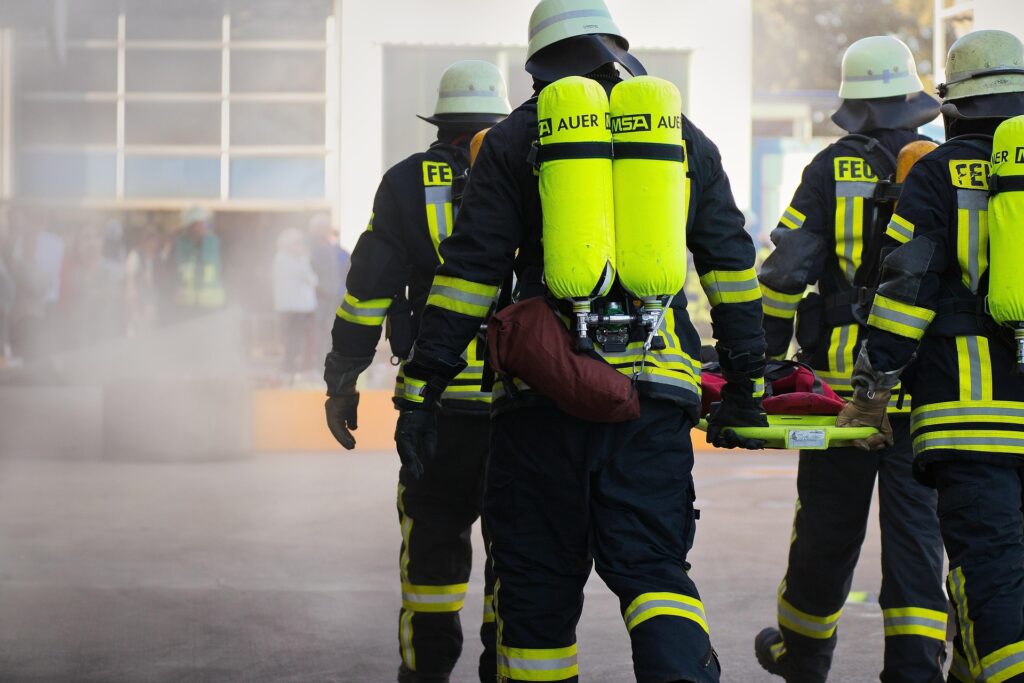
Routine preparation of a feed mill, including readiness planning, training, equipping, instruction, and the execution of drills, are essential conditions for a feed mill’s ability to cope with severe emergency situations.
The “reference scenario” is a term that defines the plausible scenario for which an adequate response must be developed in advance as part of early preparedness. The reference scenario should not be treated as an exact prediction of what will occur, but rather as a decision based on a reasonable assessment that defines the expected level of harm for which the feed mill and its emergency teams must prepare in order to provide an effective response. The use of this term for a feed mill describes possible scenarios derived from the reference scenario and adapted to the data and characteristics of the specific feed mill.
People’s responses during a crisis, stress, or danger vary in intensity from person to person. Most people channel their feelings into practical action or a struggle to change the situation. Some retreat and attempt mass flight, and some “freeze” in place and disconnect from their surroundings. It is important to remember that most people’s reactions are normal reactions to an abnormal situation.
During emergencies, the population also faces additional needs arising from the hardship of the situation and the risks involved:
-
Essential physical needs, including rescue, extraction, and treatment of casualties.
-
Information needs, including ongoing updates, guidance, and instruction regarding the situation, what to expect, and ways of coping.
-
Social and psychological needs, including concern, cohesion, morale, and support needs.
-
The need for control and leadership, as a person exposed to danger seeks to regain control over the situation.
The feed mill emergency teams are intended to fulfill all protection functions at the feed mill, after having been trained in advance for their roles.
At each feed mill, it is recommended to establish the following teams: firefighting, first aid, electricity, hazardous materials incident response (for feed mills that hold hazardous materials), and gas (for feed mills that use and or store gas). As needed, additional teams may also be established, including rescue teams, search teams, and marshals. The size, structure, and composition of the teams shall be adapted to the size and needs of the feed mill. The organization and training of the emergency teams shall be carried out by a professional authority. The equipment required for the various teams shall be purchased by the feed mill at its own expense, in accordance with the professional authority’s instructions. The feed mill must maintain the equipment in proper working order and operational readiness and renew it as necessary.
Appointment of a firefighting team is mandatory in every feed mill. The team shall include employees who have undergone training by the professional authority. Firefighting team members shall be employees with appropriate physical fitness and without health conditions that may interfere with the performance of their duties.
Appointment of a first aid team is mandatory in every feed mill. The team shall include employees who have completed a first aid responder course. If the feed mill has no employees with prior first aid training, the team must be trained for its designated role.
The rescue team shall be trained for its role by the professional authority.
Duties of the Firefighting Team
-
Serve as an immediate response force for fire incidents occurring at the feed mill.
-
Prevent fire escalation through rapid firefighting, using on-site means until local firefighting forces arrive.
-
Integrate into rescue, extraction, hazardous materials response, and any other emergency incident occurring at the feed mill.
-
Maintain team readiness by conducting drills and instruction on firefighting, escape, and evacuation. Training and qualification for the role shall be carried out by a professional authority.
-
Provide basic firefighting knowledge to feed mill employees, with attention to the feed mill’s shift-based work.
-
Verify that the firefighting team is equipped with personal protective equipment appropriate to the activity and risks at the feed mill. The equipment shall include, among other items:
-
Positive-pressure open-circuit breathing apparatus.
-
Smoke mask.
-
Fire helmet, collar, and firefighter gloves.
-
Full structural firefighting suits.
-
Smoke-penetrating flashlight.
-
Fire blanket for a burning person at designated stations.
-
Duties of the First Aid Team
-
Provide rapid first aid to casualties.
-
Evacuate casualties to a casualty evacuation point or in accordance with Magen David Adom instructions.
-
Deploy squads at first aid points, including one mobile squad.
-
Brief Magen David Adom teams upon arrival and assist them.
Role of the Hazardous Materials Team During Routine Operations
-
Become familiar with the types of hazardous materials in the facility and their properties.
-
Become familiar with detection systems and fault response procedures.
-
Prepare personal protective equipment for hazardous materials.
-
Conduct refresher training and drills to maintain team readiness.
Role of the Hazardous Materials Team During an Incident
-
Report to authorized bodies and summon them to handle the incident.
-
Take immediate control of the incident site.
-
Evacuate employees and all persons present to predesignated assembly points.
-
Perform basic detection and identification.
-
Conduct an initial risk assessment.
-
Coordinate team actions with rescue and emergency forces.
Role of the Supervision Team During an Incident
-
Direct people to shelters or to another designated evacuation area.
-
Shut down systems in accordance with the incident manager’s instructions.
-
Report incidents occurring at the feed mill to the incident manager.
-
Alert professional teams and assist them as instructed by the incident manager.
A rescue team is appropriate for a large feed mill or for a feed mill that holds hazardous materials.
Duties of the Rescue Team
-
Locate and extract trapped persons.
-
Provide immediate response to any malfunction in the electrical, gas, water, or sewage systems if they pose a threat to human life.
Emergency Team Training Topics at a Feed Mill
-
Drafting an operating procedure for emergency team response to fire incidents, hazardous materials, electricity, gas, and first aid.
-
Familiarization and practice in the use of portable fire extinguishers.
-
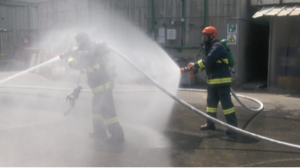
Familiarization and practice in operating water-based firefighting systems, including jet nozzles and water cannons where applicable.
-
Familiarization and practice in deploying water lines for cooling, extinguishing, or compartmentalizing areas.
-
Familiarization and practice in donning suits and attack gear.
-
Familiarization and practice in using breathing apparatus.
-
Practice in compartmentalizing fire zones.
-
Evacuation of employees to assembly areas and conducting roll call.
-
Familiarization and practice in methods of moving between areas during fire and entrapment.
-
Familiarization and practice in manual casualty transport and transport by stretcher under varied terrain conditions.
-
Practice of techniques for work at height scenarios.
-
Familiarization and practice in casualty rescue techniques in smoke-filled areas.
-
Practice in scenario management by a command staff team.
-
Familiarization and practice in donning hazardous materials suits and equipment.
-
Drilling a hazardous materials incident scenario.
-
Familiarization with procedures for a missile strike scenario.
-
Familiarization with procedures for an earthquake scenario.
-
Familiarization with procedures for hostile activity scenario.
-
Familiarization with procedures for an LPG gas or natural gas scenario.
-
Conducting an annual evacuation drill according to pre-planning, including summary, conclusions, and lessons learned.
Prof. Yitzhak HaCohen, M.A. in Firefighting, Consultant and Fire Safety Officer and Industrial Firefighter